


Private Label Blush Stick: Building a Range Beyond the Color Trend
October 29,2026
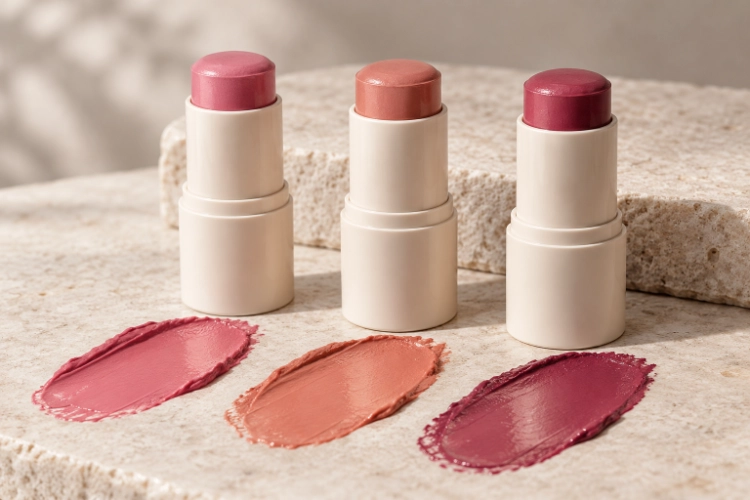
A private label blush stick should be approved for its application routine as well as its shade. Before selecting a collection, decide how the customer will apply it, how much time they should have to blend it and what finish they should see over their usual base makeup. Those decisions give the manufacturer a usable brief.
Blush remains a relevant category to investigate. Circana’s first-half 2026 U.S. beauty report identified double-digit gains for blush and bronzer within prestige makeup. It also named blush among the products supporting mass makeup growth. The report describes category momentum; it does not isolate blush sticks or establish their growth rate.
For a brand, the opportunity is to test whether a portable cream format solves a useful customer problem. A stick still needs to earn its place beside liquid and powder options through the experience it delivers.
What Makes a Private Label Blush Stick Worth Developing?
Write down the routine first. A beginner applying color with fingertips may need a different product experience from a makeup artist building color with a brush. “Easy to blend” is too broad until the brief states the method, base makeup and expected result.
Choose the lead finish: a luminous flush, a satin result or a softer matte appearance. Then specify whether the first application should be sheer or more concentrated. Keep those choices separate. A sample can have the intended finish while depositing too much color for the customer you want to serve.
BGVE’s official website includes blush sticks in its face makeup navigation. That establishes a relevant category for discussion, but current formulas, shade options, package choices and intended-use claims should be confirmed directly for the project.
Review the Blush over Base Makeup
A hand swatch is useful for an early color comparison. Include face application in the approval process, especially if the product will be marketed for use over foundation or sunscreen. Review it with representative routines rather than assuming one successful combination will suit every customer.
Ask reviewers to compare direct application with pickup by brush or fingertips. Note whether the base moves, whether edges remain visible and how the color builds after the first layer. Keep the preparation and application method consistent between sample rounds so that feedback can be traced to a formula change.
Separate blendability from wear. An attractive result immediately after application does not establish a long-wear claim. If wear performance matters to the positioning, agree on the evaluation method, conditions and evidence needed for the proposed wording. Do not turn casual sampling notes into a quantified promise.
When sending feedback, replace “make it better” with an observable request. For example: the sample leaves an obvious edge when blended with fingertips over the selected foundation. Include the sample code and routine. This gives the development team something specific to investigate.
Give Every Shade a Commercial Role
Plan the range around use, undertone and depth rather than a list of fashionable names. A muted everyday shade, a brighter accent and a deeper option may serve different needs, but the selection should follow the target customer and the brand’s existing assortment.
Review shades on the intended range of skin tones. Ask whether they remain distinct after blending and whether the amount needed for a visible result is practical. Two sticks can look different in the tube yet become hard to distinguish in use. Another shade may appear strong in a swatch but require too much effort to blend for the intended routine.
Save physical approval references alongside controlled photographs. Record the lighting, application method and shade code. Use those references when reviewing production rather than relying on a supplier image or a screen color alone.
If a proposed shade adds little to the range, ask for an alternative before artwork is approved. A smaller, clearly differentiated assortment can be easier to explain than a larger collection with overlapping roles. Compare the commercial options against actual quotations and order constraints.
Treat the Stick Mechanism as Part of the Product
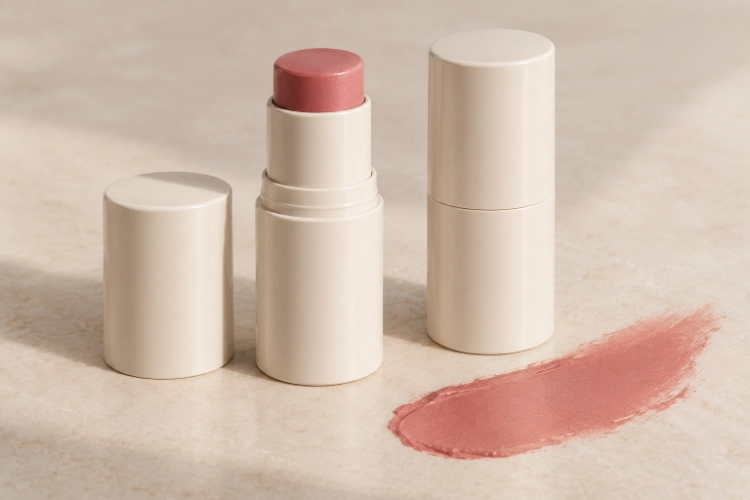
Evaluate a filled component, including extension, retraction, cap clearance and closure. Ask reviewers to use the intended exposed length of product and record the handling method. A mechanism that looks appealing in an empty-pack presentation still needs review with the chosen formula.
Include the expected storage and shipping conditions in the supplier discussion. Ask what stability, compatibility and handling checks are appropriate and what acceptance criteria will be agreed. Avoid choosing a temperature or duration simply because it sounds rigorous; the test plan should be justified for the product and route.
BGVE’s OEM page lists stability, heat-resistance and packaging-compatibility activities. Ask which checks are proposed for the selected blush stick and how the results will be documented. Keep the formula, component and decoration versions tied to the test and approval records.
Decide Whether Multi-Use Positioning Is Necessary
A coordinated lip-and-cheek story may suit the brand, but it creates another intended use to evaluate. Do not add lip or eye use just because a similar color looks attractive there. Ask for confirmation that the formula, colorants, assessment and labeling support each proposed application area in the destination market.
Keep the commercial promise focused if wider use is not essential. A blush that customers can apply predictably has a clear benefit without needing a long list of uses. If multi-use positioning is central, include it at the start of development so that sampling and documentation address the complete brief.
Review launch assets with the same boundary. A demonstration showing eye application can communicate an intended use even when the carton only says “blush.” Align the product description, tutorial and sales materials before release.
A Practical Brief for Your Blush Stick Manufacturer
Use the following checklist to compare proposals on the same basis:
- Target customer, destination market and sales channel.
- Application method and representative base-makeup routine.
- Lead finish, initial payoff and desired buildability.
- Shade roles, undertones and depth coverage to evaluate.
- Proposed component, size and decoration direction.
- Intended application areas and performance wording.
- Agreed sample references, review owner and approval records.
- Order range, shade-level MOQ questions and replenishment assumptions.
Ask the manufacturer to identify what is already available and what needs development. Separate formula sampling, shade approval and package confirmation in the quotation discussion. If the commercial plan changes, make sure the new shade count or component choice is reflected in the next proposal.
Frequently Asked Questions
Does blush growth prove that sticks will outperform liquid blush?
No. The cited U.S. report supports interest in blush as a category and does not provide a stick-versus-liquid comparison. Choose the format by reviewing customer routines, channel expectations and actual samples. Use category growth as context while testing whether the proposed product has a clear role.
How many shades should a first collection include?
There is no universal launch count. Begin with distinct shade roles, review their performance on the intended skin tones and compare supplier quotations. Confirm whether minimum quantities apply per shade or component. Add a shade because it serves a customer need, rather than to match another brand’s collection size.
What should a brand send BGVE to start development?
Contact BGVE with the intended finish, application method, shade references, destination market and package direction. Include order assumptions and any multi-use proposal. Ask for current options and the next sampling step, with performance and availability confirmed for the selected project.