




How to Store Makeup and Know When to Replace It
October 14,2026
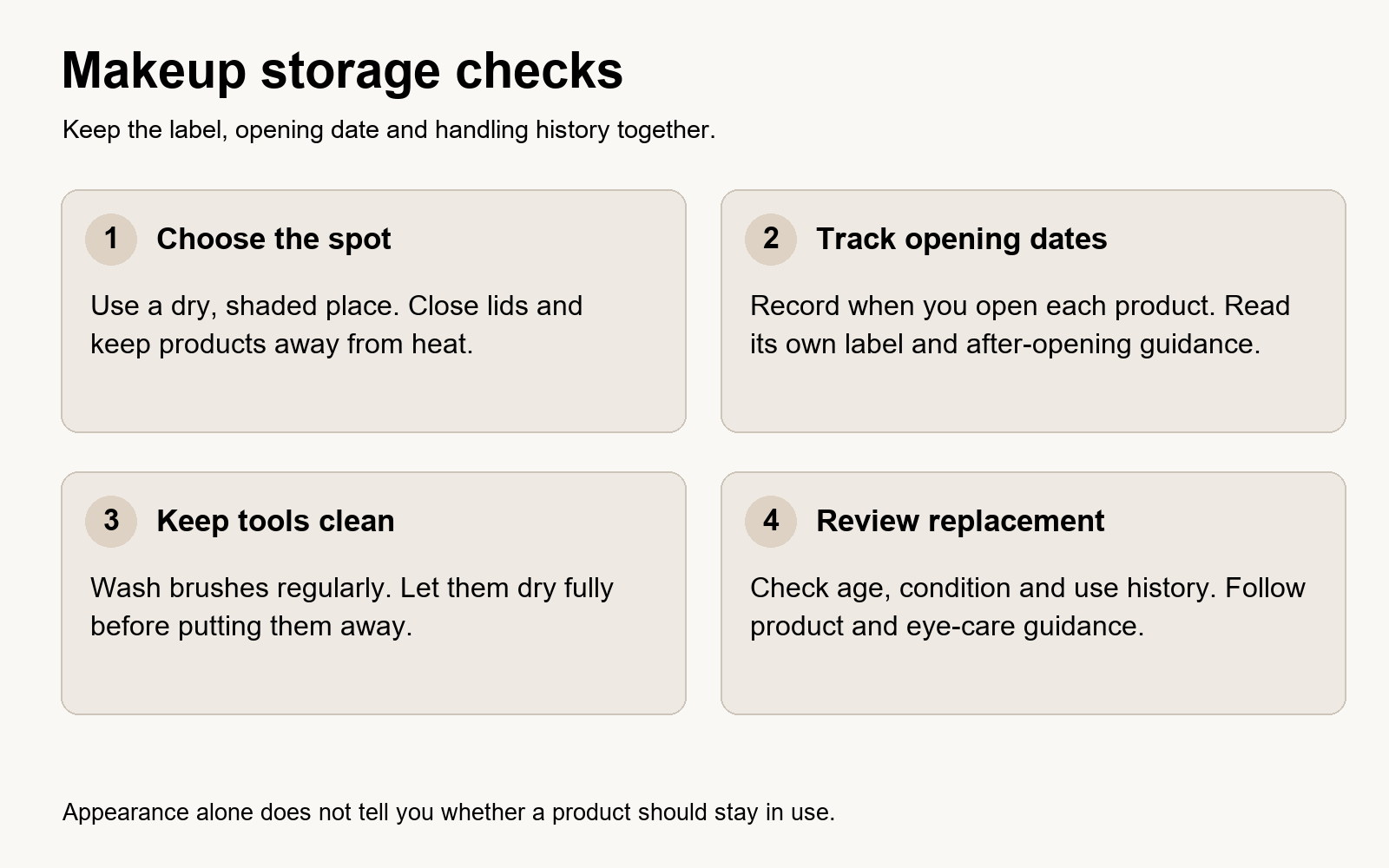
A bathroom shelf is a convenient place to leave foundation, mascara and brushes. It is also where those products may sit through steam, splashes and repeated changes in temperature. Moving everyday makeup to a dry drawer can be more useful than buying another organizer.
Storage and replacement belong together. A tightly closed bottle still needs an opening date. A brush washed this morning needs somewhere to dry before it goes back into a case. And a product that looks normal may still need replacing because of its age or how it has been used.
The aim is a routine you can keep up with: readable labels, clean tools, closed lids and fewer forgotten products.
BGVE develops and manufactures color cosmetics including foundation, eyeliner, lip products, and nail products, with OEM/ODM support spanning formula development, production, and packaging.
Choose a Storage Spot Before Choosing an Organizer
Look for a dry, shaded place away from radiators, sunny windows and other heat sources. A bedroom drawer or cupboard is often more suitable than a damp bathroom shelf. Keep the products you use regularly near the front so you can reach them without tipping everything out.
Clear acrylic boxes are useful for seeing what you own, but the box does not protect its contents from sunlight. Where you put it matters more than its material or price.
A makeup bag works too, provided it is clean and dry. Wipe away loose powder and residue, then let the lining dry fully before refilling it. Do not put damp brushes into a closed bag.
Avoid leaving makeup in a parked car. For travel, take what you need, check that each closure is secure and move the bag out of direct sunlight when you arrive.
Refrigeration is a separate question. Follow the manufacturer’s instructions; there is no useful rule that every cosmetic belongs in a fridge. A cool-feeling product is not necessarily better preserved, and refrigeration does not reset its usable life.
Write Down the Date You Open Each Product
Purchase dates are easy to find in an order history. Opening dates are much easier to forget, particularly when several products are in rotation.
Put a small dated sticker on the base or side when you first open something. Keep it clear of the ingredient list, batch code and other important label information. For a narrow pencil or pen, a note in your phone may be more practical.
There are two different things to check:
- Any expiry or best-before information supplied by the manufacturer.
- Instructions about how long to use the product after opening.
Where a period-after-opening symbol appears, it usually resembles an open jar with a number followed by “M.” That number indicates months after opening. Read it alongside the rest of the label rather than treating it as a promise that the product remains suitable under every storage condition.
Unopened does not mean indefinitely usable, either. A sealed backup still has a manufacturing history and storage conditions to consider.
If the instructions are missing or unclear, ask the manufacturer. Guessing a shelf life from another brand’s similar-looking product gives you a date, but not a reliable answer.
Make the Note Useful
“Opened 21 September” is enough. If you also record the label’s after-opening guidance, you will not need to search for a tiny symbol later.
Avoid opening several backups just to compare their colors. Once opened, they become additional products to track.
Keep the Original Packaging Doing Its Job
Original containers keep product identity, label instructions and batch details together. They also give you the closure and applicator intended for that particular product.
For Liquid Foundation, check the pack you actually have: a pump, bottle opening or other dispenser will need slightly different handling. Wipe visible residue from the outside of the opening with a clean tissue and close it properly. Do not return leftover foundation from your hand or mixing palette to the container.
A pen-format Liquid Eye Liner needs its cap replaced securely after use. Follow its own storage directions rather than assuming every eyeliner should stand tip-up or tip-down.
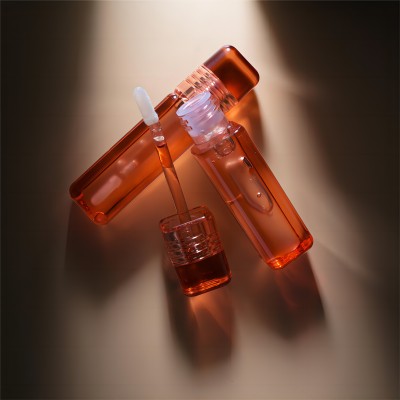
With an applicator product such as Lip Gloss, keep the wand and cap away from dirty surfaces. If product gathers around the outer rim, remove the residue before closing the tube.
Avoid topping up an almost-empty container with a new product. It mixes batches and opening histories, leaving you without a clear date for the contents. Decanting into an unlabelled travel pot creates the same tracking problem.
For travel, an appropriately sized original pack is easier to identify. If transferring a product is unavoidable, follow the manufacturer’s advice and retain its name, batch information and opening date. Never assume the original shelf-life guidance carries over unchanged.
Give Eye Makeup Its Own Replacement Check
Eye products deserve a separate place in your routine because they are used close to the eye, often with a brush or applicator that repeatedly returns to the container.
The American Academy of Ophthalmology’s eye makeup safety guidance recommends replacing eye makeup after three months. Keep the opening date visible so that recommendation is practical to follow. Also read the product instructions, particularly if they call for earlier replacement.
The Academy advises against sharing eye makeup and recommends applying it outside the lash line. Borrowing mascara or eyeliner for one evening still means sharing the applicator.
If you develop an eye infection, stop using eye makeup until the infection has resolved. The Academy advises immediately discarding all of your eye makeup. Waiting for it to look or smell different is not an appropriate check.
Do not try to make an old product last longer by adding water, saliva or another cosmetic. If a formula becomes difficult to use, check its age and instructions instead of improvising a thinner.
These decisions are separate from how much product remains. An almost-full tube may still need to go.
Leave Room for Brushes to Dry Properly
A storage setup needs a temporary drying space as well as a permanent brush holder. Otherwise, freshly washed brushes tend to go straight into a cup or zipped pouch while still wet.
The American Academy of Dermatology’s makeup brush cleaning advice recommends washing brushes every seven to ten days. Its method focuses on cleaning the tips rather than immersing the whole brush head.
Rinse the tips under lukewarm running water, use a bowl of lukewarm water with gentle shampoo, and swirl or massage the tips to release residue. Rinse until the water runs clear, then squeeze out excess moisture with a clean, dry paper towel.
Lay the brushes flat with their tips extending over the edge of a counter so they can dry. The Academy advises against drying them upright, where water can run down toward the part holding the bristles.
Only return fully dry brushes to their usual storage. Keep that container clean too; a washed brush should not go back into a cup lined with old powder.
The same guidance also advises against sharing brushes. Having separate tools is useful even when two people use similar makeup.
Sort Products by What Needs Action
You do not need a universal expiry chart taped inside the drawer. Different products have different instructions, and their condition and use history matter.
A short review can separate storage problems from replacement decisions:
|
What you find |
What to do next |
|
Clear label and known opening date |
Check the instructions and keep tracking use |
|
Missing or unreadable instructions |
Contact the manufacturer before guessing |
|
Unusual smell, texture or color |
Stop using it and check with the manufacturer |
|
An eye infection develops |
Discard all eye makeup, following the Academy’s guidance |
|
Damp brushes inside a closed case |
Remove them, clean as needed and dry properly |
|
Old and new product mixed together |
Do not treat the mixture as a fresh new batch |
Changes in appearance, smell or texture are reasons to pause. Their absence is not proof that a product is safe to keep using. Dates, handling and relevant health guidance still count.
When you find a product you cannot remember opening, resist assigning it a convenient recent date. Check your records. If its history remains uncertain, seek product-specific advice rather than relying on how much is left.
Keep backups separate from opened makeup. This makes it easier to see what is actually in use and avoids opening a replacement simply because the current bottle is buried.
If you are planning a makeup line and want to discuss formulas, packaging, samples, or OEM/ODM production, contact BGVE to review your project requirements.
Questions That Come Up When Clearing a Makeup Drawer
Can I Keep Makeup in the Bathroom If the Lid Is Closed?
A closed lid is important, but it does not remove the effects of the surrounding environment. A dry, shaded location is a more practical default than a shelf exposed to shower steam and splashes. Follow any specific storage conditions on the label.
Does a Product Need Replacing If It Still Smells Normal?
Possibly. Smell is only one observation. Consider the manufacturer’s instructions, the opening date and how the product has been handled. If an eye infection develops, for example, the Academy advises discarding all your eye makeup even if it seems unchanged.
What Should I Do With Unopened Makeup I Have Had for Years?
Read the packaging for dates and storage instructions, then contact the manufacturer if anything is unclear. Keep the batch code available when you ask. An intact seal tells you the pack has not been opened; it does not establish that the contents remain suitable indefinitely.