




How to Remove Waterproof Liquid Eyeliner Without Irritating Your Eyes
April 30,2026
At the bathroom sink during late evening, the urge to scrub hard at persistent cosmetics grows quite intense. Waterproof eyeliner proves invaluable in damp conditions or during lengthy work periods. However, removing it frequently becomes an aggravating struggle. Wiping the lids harshly results in reddened, swollen skin that risks early creases.
The key to effortless removal lies in a straightforward technique: employing a bi-phase, oil-based solution paired with the “soak and press” approach. This method breaks down polymers via chemical action instead of mechanical rubbing. For bold wing designs or mere faint outlines with everyday cosmetics, correct removal maintains eye health and ease.
The Science Behind Waterproof Formulas
Understanding what holds makeup in place aids in removing it properly. Quality waterproof eyeliners depend on silicone-based film creators. Substances such as trimethylsiloxysilicate dry fast upon use, forming a solid layer over the skin. This water-repelling shield prevents water and oil from entering, allowing the color to last 8 to 12 hours.
Cosmetic science seeks to pair this strong staying power with secure removal. A thoughtfully designed Liquid Eye Liner from BGVE employs a pliable polymer network. It withstands perspiration all day yet dissolves neatly with the proper solution. Many notice how low-cost eyeliners crumble into the eyes, whereas superior versions simply soften and vanish. This variation stems from the resin’s caliber and the exact blend of film agents in production.
The Soak and Press Method: Step-by-Step
Eliminating a tough film creator demands science, not brute force. Below is the precise routine to safeguard the skin.
Choose the Right Solvent
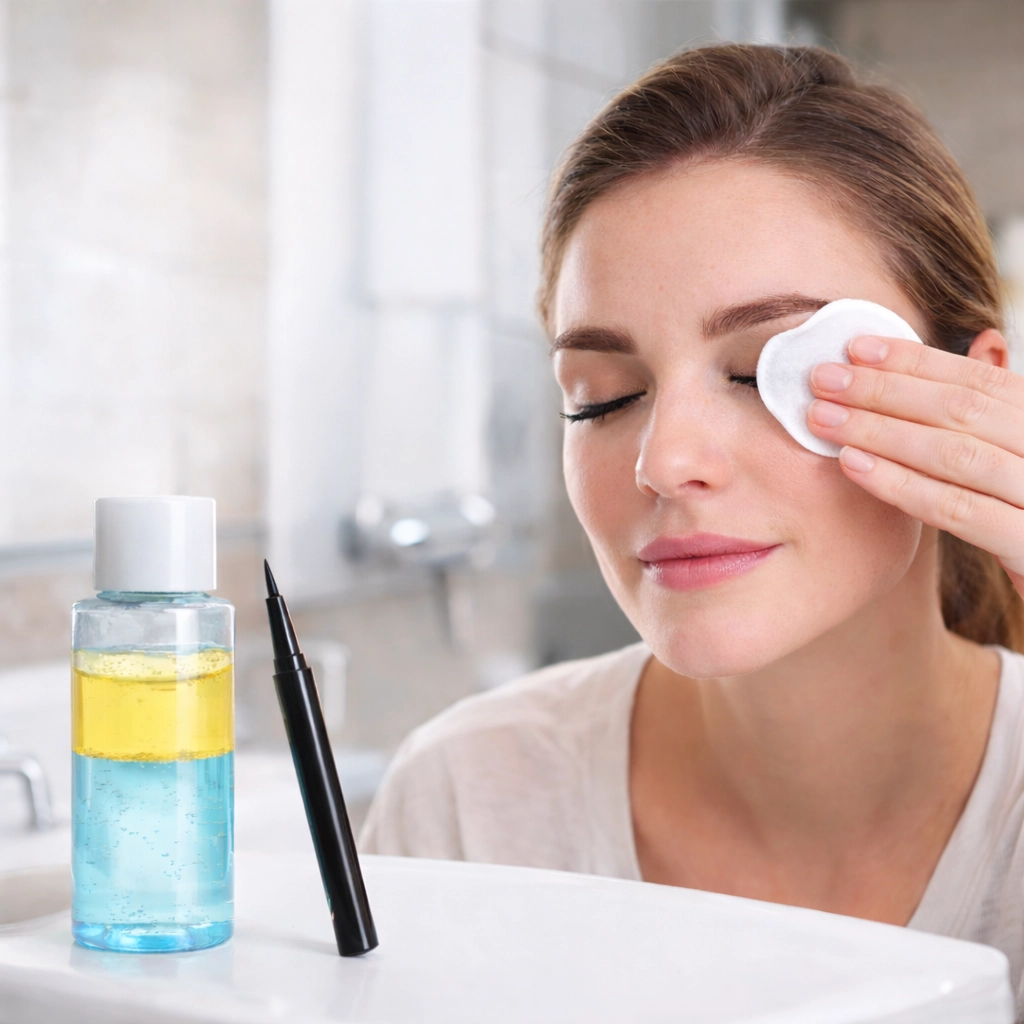
Ordinary water micellar solutions typically cannot handle waterproof materials. Opt for a bi-phase makeup remover or a thick cleansing oil. Bi-phase types need shaking well to blend oil and water parts. The oil directly attacks and softens the silicone elements, as the water carries the color off.
Saturate and Wait
Dampen a plush cotton pad using the selected remover. Place it softly on the closed eyelid. The challenging aspect involves pausing for 15 to 20 seconds. Individuals frequently skip this because they aim to complete the process fast. Yet, the solution requires sufficient time to enter the eyeliner and sever the film’s molecular links.
The Gentle Downward Swipe
Following the pause, glide the cotton pad steadily downward, aligning with the lash direction. Refrain from side-to-side wiping. The eye-area skin remains extremely fine and has few oil sources. Harsh rubbing harms the protective layer and leads to soreness.
Precision Clean-up
Occasionally, small dark bits linger at the lash bases. Moisten a fine cotton swab with remover and trace the lash edge with care. This focuses on remaining particles without introducing oil near the tear openings, which can produce bothersome blurred sight.
Post-Removal Care for the Delicate Eye Area
Even effective removers may deposit faint traces. Proceed with a mild, water cleanser. This additional wash removes eyeliner pieces and excess oils from the remover.
Afterward, restore the skin. Removal naturally removes some surface oils, so use a hydrating eye cream. Select products with sodium hyaluronate, which holds 500 times its weight in moisture. It creates a softening layer and draws in water to maintain supple, even, and resilient skin. Spending moments to moisturize avoids the taut, rough sensation after thorough washing.